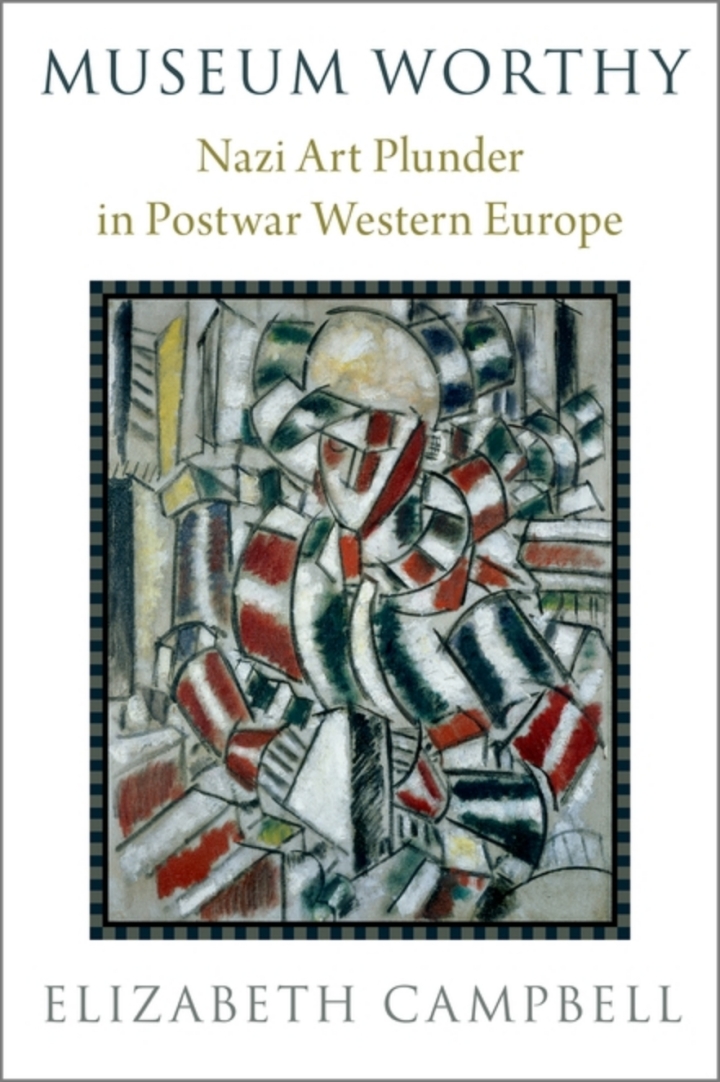
Museum Worthy Nazi Art Plunder in Postwar Western Europe
$7.80
Attention: This is just ebook, Access Codes or any other Supplements excluded! / File Delivery: Sent Via Email within 24 hours!

SKU: c1434f6db81f
Category: Law Textbooks
Description
-
Author(s)Elizabeth Campbell
-
PublisherOxford University Press
-
FormatPDF
-
Print ISBN
9780190051983, 0190051981 -
eText ISBN
9780190051983, 0190051981 -
Edition2023
-
Copyright
- Details
Art looting is commonly recognized as a central feature of Nazi expropriation, in both the Third Reich and occupied territories. After the war, the famed Monuments Men (and women) recovered several hundred thousand pieces from the Germans’ makeshift repositories in churches, castles, and salt mines. Well publicized restitution cases, such as that of Gustav Klimt’s luminous painting featured in the film Woman in Gold, illustrate the legacy of Nazi looting in the art world today. But what happened to looted art that was never returned to its rightful owners?In France, Belgium, and the Netherlands, postwar governments appropriated the most coveted unclaimed works for display in museums, embassies, ministries, and other public buildings. Following cultural property norms of the time, the governments created custodianships over the unclaimed pieces, without using archives in their possession to carry out thorough provenance (ownership) research. This policy extended the dispossession of Jewish owners wrought by the Nazis and their collaborators well into the twenty-first century.The custodianships included more than six hundred works in Belgium, five thousand works in the Netherlands, and some two thousand in France. They included paintings by traditional and modern masters, such as Rembrandt, Cranach, Rubens, Van der Weyden, Tiepolo, Picasso, and Matisse. This appropriation of plundered assets endured without controversy until the mid-1990s, when activists and journalists began challenging the governments’ right to hold these items, ushering in a period of cultural property litigation that endures to this day. Including interviews that have never before been published, Museum Worthy deftly examines the appropriation of Nazi art plunder by postwar governments and highlights the increasingly successful postwar art recovery and restitution process.
Related products
-
Atiyah’s Introduction to the Law of Contract 6th Edition
Rated 0 out of 5$30.88 Add to cart -
50 Years of Central Banking in Kenya
Rated 0 out of 5$40.62 Add to cart -
Constitutional Adjudication in Africa 1st Edition
Rated 0 out of 5$45.50 Add to cart -
Constituting Economic and Social Rights
Rated 0 out of 5$17.88 Add to cart