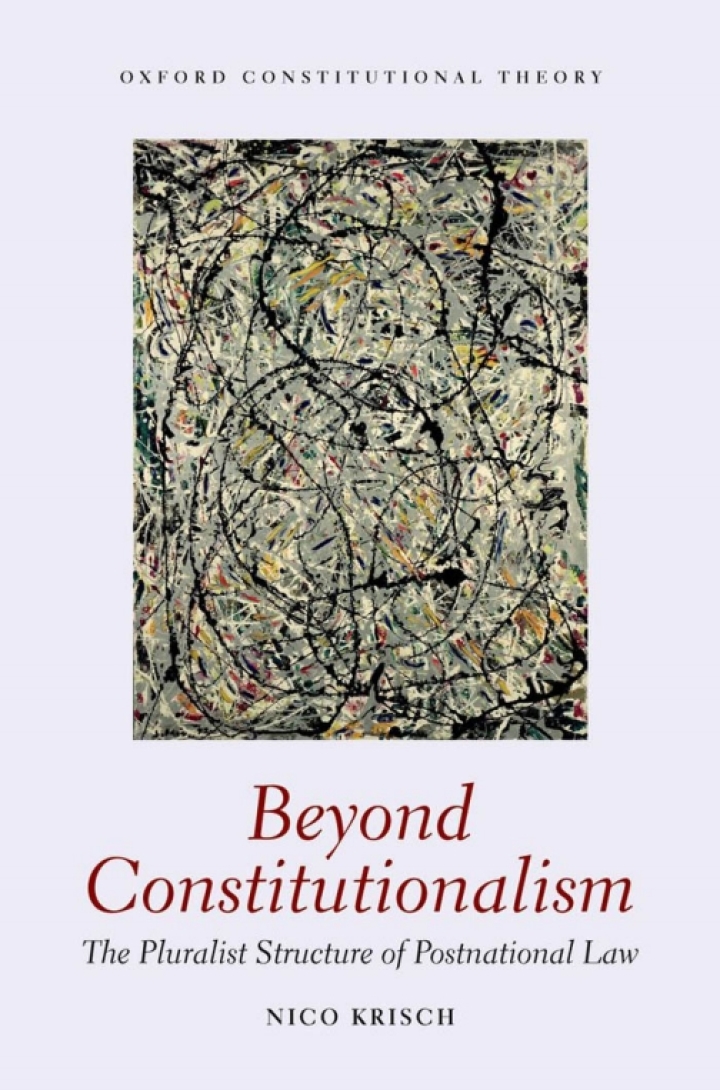
BEYOND CONSTITUTIONALISM OCON C The Pluralist Structure of Postnational Law
$22.10
Attention: This is just ebook, Access Codes or any other Supplements excluded! / File Delivery: Sent Via Email within 24 hours!
SKU: df654d8860f4
Category: Law Textbooks
Description
-
Author(s)Nico Krisch
-
PublisherOUP Oxford
-
FormatPDF
-
Print ISBN
9780199228317, 0199228310 -
eText ISBN
9780199228317, 0199228310 -
Edition
-
Copyright
- Details
Under pressure from globalisation, the classical distinction between domestic and international law has become increasingly blurred, spurring demand for new paradigms to construe the emerging postnational legal order. The typical response of constitutional and international lawyers as well as political theorists has been to extend domestic concepts – especially constitutionalism – beyond the state. Yet as this book argues, proposals for postnational constitutionalism not only fail to provide a plausible account of the changing shape of postnational law but also fall short as a normative vision. They either dilute constitutionalism’s origins and appeal to ‘fit’ the postnational space; or they create tensions with the radical diversity of postnational society. This book explores an alternative, pluralist vision of postnational law. Pluralism does not rely on an overarching legal framework but is characterised by the heterarchical interaction of various suborders of different levels – an interaction that is governed by a multiplicity of conflict rules whose mutual relationship remains legally open. A pluralist model can account for the fragmented structure of the European and global legal orders and it reflects the competing (and often equally legitimate) claims for control of postnational politics. However, it typically provokes concerns about stability, power and the rule of law. This book analyses the promise and problems of pluralism through a theoretical enquiry and empirical research on major global governance regimes, including the European human rights regime, the contestation around UN sanctions and human rights, and the structure of global risk regulation. The empirical research reveals how prevalent pluralist structures are in postnational law and what advantages they possess over constitutionalist models. Despite the problems it also reveals, the analysis suggests cautious optimism about the possibility of stable and fair cooperation in pluralist settings.
Related products
-
A Measure of Freedom
Rated 0 out of 5$29.25 Add to cart -
Civil Wrongs and Justice in Private Law 1st Edition
Rated 0 out of 5$43.88 Add to cart -
50 Years of Central Banking in Kenya
Rated 0 out of 5$40.62 Add to cart -
Africa’s International Investment Law Regimes 1st Edition
Rated 0 out of 5$61.75 Add to cart